Saudi Market6 min read
Arabic NLP in Business: What’s Actually Possible Today
Key takeaways
- Arabic AI is now reliable enough for production business tasks, including mixed Arabic-English messages.
- It works well for customer support, document extraction, internal search, routing and summaries.
- Heavy dialect and poor scans still need testing and human review; PDPL affects where Arabic AI runs.
Arabic language AI has matured dramatically. If you operate in the GCC and haven’t revisited what’s now achievable with Arabic natural language processing (NLP), this guide is for you.
Why Arabic has been harder for AI
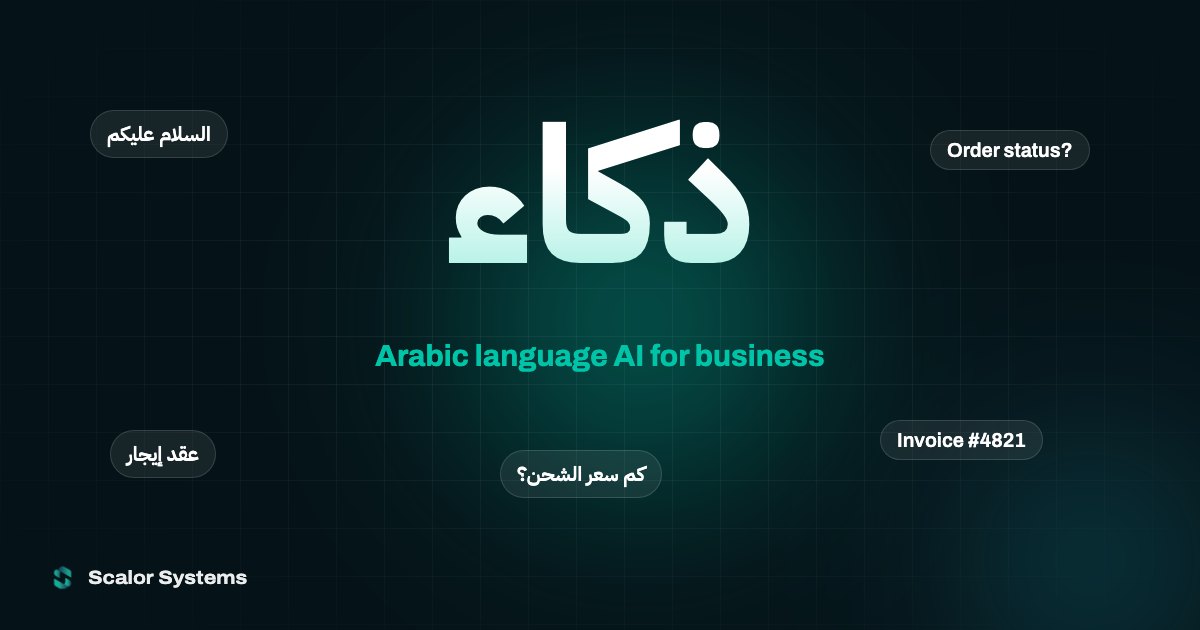
Arabic is rich in structure. A single root can produce dozens of related words, short vowels are usually left out in writing, and the same word can mean different things depending on context. On top of that, people write in Modern Standard Arabic for formal documents but chat in Gulf, Egyptian or Levantine dialects, often mixed with English and sometimes typed in Latin letters.
Early AI tools were trained mostly on English and handled all of this poorly. That’s why many GCC companies tried Arabic chatbots a few years ago and gave up.
What has changed
Modern large language models are trained on far more Arabic text, and dedicated Arabic models have been developed in the region. Combined with good engineering, such as retrieval from your own documents, clear instructions and testing on real customer messages, Arabic AI is now reliable enough for production use in many business tasks.
What works well today
- Customer support in Arabic and English, including mixed-language messages on WhatsApp.
- Extracting data from Arabic invoices, contracts, commercial registrations and IDs.
- Searching internal policies and documents in Arabic and getting answers with sources.
- Classifying and routing emails, complaints and tickets by topic and urgency.
- Summarising long Arabic documents and meeting notes.
What still needs care
Heavy dialect, poor-quality scans and handwritten Arabic still need extra work: more testing, human review for low-confidence cases, and sometimes a model tuned on your own examples. Legal and financial outputs should always have a human check before anything is sent or signed.
Data rules matter as much as accuracy
For Saudi companies, customer data falls under the Personal Data Protection Law (PDPL), supervised by SDAIA. That affects where your AI runs and where data is stored. The good news is that in-Kingdom cloud regions and self-hosted models now make compliant Arabic AI practical for mid-market budgets.
How to get started
Pick one high-volume Arabic workflow, such as support messages or incoming documents, and test AI on a sample of real examples before committing. If the results hold up, scale from there. That’s the approach we take with every Arabic NLP project.