AI Strategy5 min read
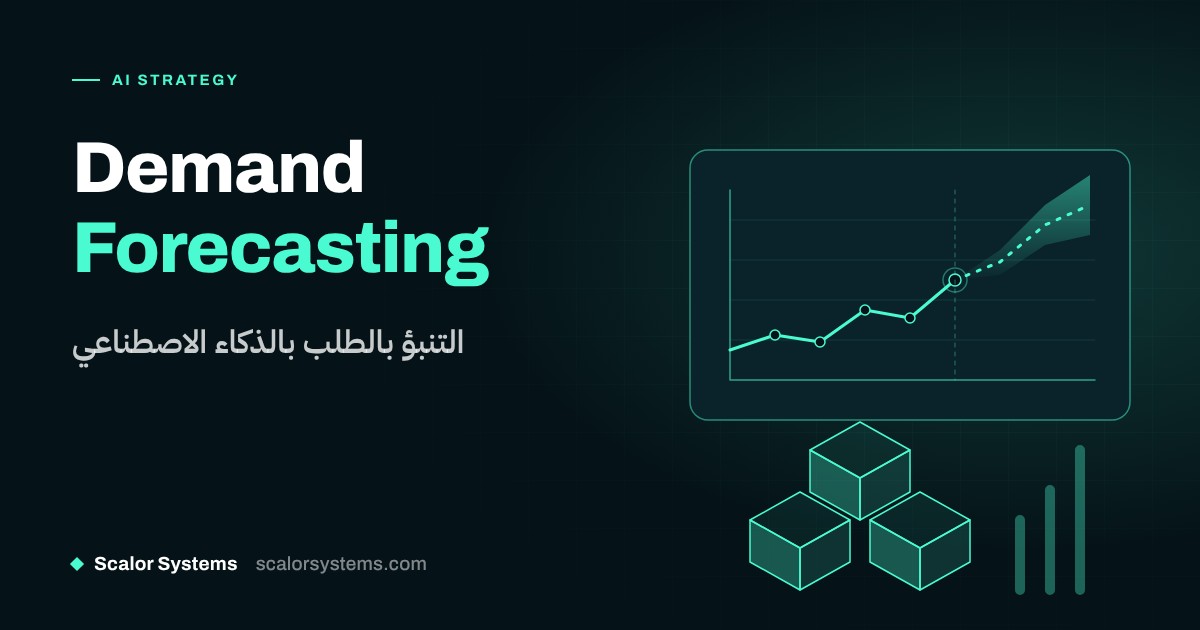
AI Demand Forecasting Saudi Arabia: Where to Start
Key takeaways
- GASTAT’s Q2 2026 bulletin shows Saudi e-sales up 9.8% year on year, led by a 13.4% rise in retail, while overall operating revenue grew only 3.2%. Demand is shifting fast, and fixed stock rules lag behind it.
- Gartner’s September 2026 research expects only 5% of organizations with planning automation to make at least 10% of planning decisions autonomously by 2030. Routine decisions such as replenishment automate first, so start there and keep people on strategy.
- Pick one product group and one branch, write down today’s forecast error, run an AI forecast beside your current method for eight to twelve weeks, and scale only if it clearly wins.
AI demand forecasting Saudi Arabia is no longer only a topic for the largest distributors. In 2026 a Nasdaq-listed technology firm and a Riyadh investor put a five-year, 30 million US dollar venture behind it, and Gartner is publishing new warnings on how far automated planning can go. This guide is written for owners and managers in Dammam, Khobar, Riyadh and Jeddah who buy and sell stock: retailers, distributors, logistics firms, clinics with supplies and facilities teams. It sets out what the data says, where forecasting pays off first, and a six-step pilot you can run without replacing your systems.
Why demand is harder to guess in 2026
The General Authority for Statistics (GASTAT) published its wholesale and retail trade bulletin for the second quarter of 2026. It shows the e-sales index up 9.8% year on year, led by a 13.4% rise in retail trade. The overall operating revenue index grew 3.2% year on year but fell 0.6% from the first quarter, with retail up 5.2% and wholesale excluding motor vehicles up 0.8%, as reported by Zawya from the Saudi Gazette.
Read together, those numbers say that sales are moving between channels and categories faster than the total. A branch rule such as “reorder the same quantity as last month” will miss that shift. The result is the familiar pair of problems: shelves that run empty on the items people want, and cash tied up in stock that does not move.
What the market is doing
On 27 May 2026 RedCloud Holdings, a Nasdaq-listed company, announced that its Saudi joint venture with the Riyadh-based Kayanat had started operations. It is a five-year, 30 million US dollar arrangement aimed at the Kingdom’s 68 billion US dollar FMCG market. The platform, called RAID, uses Inventory, Sales and Market Planning agents and is designed to run alongside a customer’s existing ERP system, not replace it.
The release quotes Kayanat’s owner, Majid Alghaslan, saying that Saudi distributors face demand patterns that legacy ERP systems cannot anticipate, citing Hajj and Umrah seasonality, Riyadh Season and the year-round major-events calendar. This is a vendor’s own claim, so treat it as a description of the problem and not as proof of results. It does show that serious money is going into the idea that forecasting should sit on top of the ERP you already have.
Adoption data points the same way. Arab News reported on 14 June 2026, citing GASTAT, that 33.1% of Saudi businesses used AI in 2025, and that transportation and storage reached 44.4%. Logistics is already ahead of the average.
AI demand forecasting Saudi Arabia: where it pays off first
Gartner’s press release of 24 September 2026 is a useful reality check. Based on a survey of 243 senior supply chain leaders at organizations with at least 500 million US dollars in revenue, it predicts that only 5% of organizations with planning automation will make at least 10% of planning decisions autonomously by 2030. Gartner says routine operational decisions such as replenishment and order prioritization have the most potential to automate, while strategic ones such as network design and inventory policy will still need human judgment.
For a mid-sized Saudi company our reading is practical. Do not aim for a self-driving supply chain. Aim for better numbers on the routine decisions your planner makes every week. These are the places we would look first:
- Retail and e-commerce: weekly reorder quantities by branch and product, with Ramadan, school terms and sale events as inputs.
- Logistics: shipment volumes by lane and week, so fleet and warehouse shifts are planned before the peak, not during it.
- Healthcare: consumables and pharmacy stock, plus appointment demand by clinic.
- Facilities: spare parts and consumables for maintenance, based on past work orders.
What a forecast needs from your data
You do not need years of perfect records. You need a clean history of what was sold or shipped, by day or week, by product and location, and a note of when stock ran out, because zero sales on an empty shelf is not zero demand. Add the calendar events that move your business: Ramadan and Eid dates, school terms, promotions, and local events. If your data sits in spreadsheets or several systems, the first job is to bring it together, which is what our AI Integration service does.
A six-step pilot to run first
- Choose one product group and one branch or lane. A narrow scope gives a clear answer within weeks.
- Write down how you forecast today and measure its error over the last three months, for example the average gap between forecast and actual sales.
- Export at least 12 months of sales or shipment history and mark the weeks when stock ran out.
- List the events that change demand, with dates, and give them to the model as inputs.
- Run the AI forecast beside your current method for eight to twelve weeks. Do not change orders on its numbers alone until you have compared them.
- Scale only if it beats your current method on error and on the cost of stock-outs and excess stock. If it does not, adjust the data and try again.
Keep people in charge of the decision
Our advice is to judge a forecast by whether your planners actually use it and whether manual workarounds decline. If your buyer overrides every number, the model is wrong or not trusted. If nobody ever overrides it, nobody is checking. A weekly review of the biggest misses, led by the person who owns the stock, keeps the forecast honest.
How Scalor Systems can help
Our forecasting and predictive analytics solution builds demand forecasts on your own sales and stock data, and our AI dashboards and reporting solution puts them in front of your planners each week. Both start with the pilot above. To scope a first forecast for one product group, book a free discovery call with Scalor Systems at scalorsystems.com/contact. If you are also looking at customer chat, read our guide to AI customer service in Saudi Arabia.
Sources
- Gartner: Gartner Predicts Only 5% of Organizations Will Make At Least 10% of Supply Chain Planning Decisions Autonomously by 2030 (24 September 2026)
- Zawya (from Saudi Gazette), citing GASTAT: Saudi e-sales surge 9.8% in Q2 as retail trade jumps 13.4% (2026)
- RedCloud Holdings via GlobeNewswire: RedCloud launches Saudi operations under $30M joint venture with Kayanat (27 May 2026)
- Arab News: Saudi AI adoption among businesses rises to 33% in 2025: GASTAT (14 June 2026)