AI Strategy6 min read
SDAIA’s AI Adoption Framework: A Practical Checklist for Saudi Companies
Key takeaways
- SDAIA’s AI Adoption Framework (November 2025) sets a governance baseline for AI in Saudi Arabia.
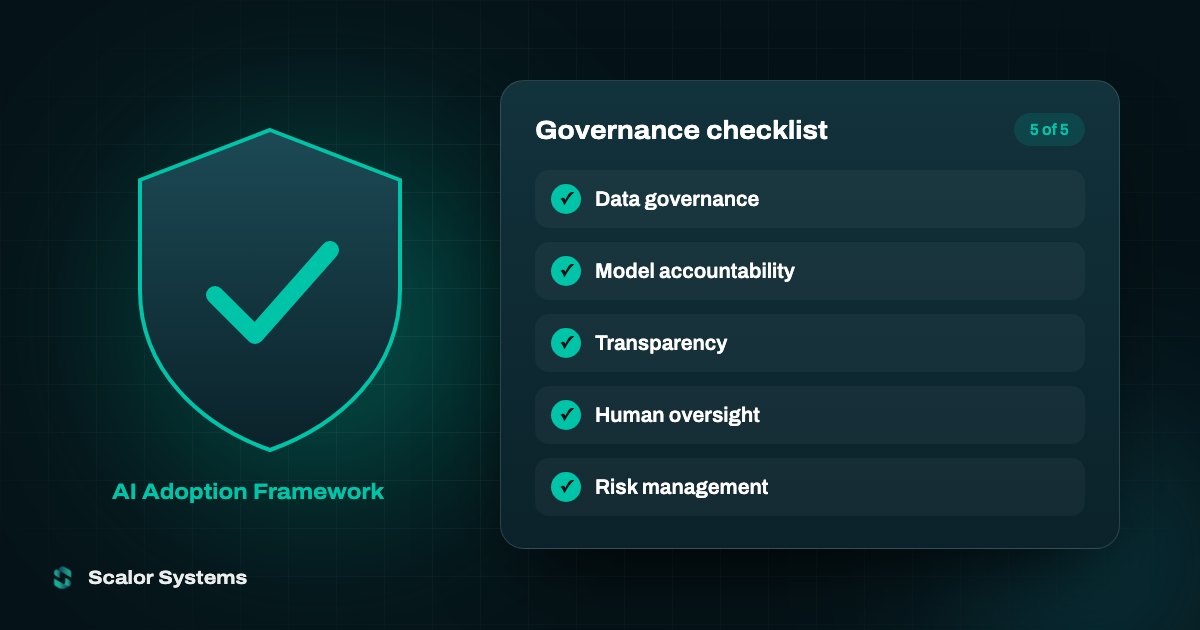
- It covers five areas: data governance, model accountability, transparency, human oversight and risk management.
- A one-page AI register per system is the simplest way to stay compliant without slowing projects.
In November 2025 the Saudi Data and AI Authority (SDAIA) released its AI Adoption Framework, a governance baseline for organisations using AI. This checklist turns its main areas into practical steps. It is a starting point, not legal advice, so always check SDAIA’s official documents for the current requirements.
The five areas it covers
Published summaries describe the framework as covering five areas: data governance, model accountability, transparency, human oversight and risk management. Here is what each means in day-to-day practice.
1. Data governance
- List the data each AI system uses and where it comes from.
- Classify personal and sensitive data, and confirm your lawful basis under PDPL.
- Decide where data and models are hosted, and keep them in the Kingdom when required.
- Limit access so people and systems only see what they need.
2. Model accountability
- Name a business owner for every AI system.
- Document its purpose, the model used, and how it was tested.
- Keep a record of versions and changes over time.
3. Transparency
- Tell customers and staff when they are interacting with AI.
- Show sources for answers wherever possible.
- Be able to explain, in plain language, how important outputs were produced.
4. Human oversight
- Require human approval for high-impact actions such as payments, refunds or rejections.
- Give every AI system a clear route to hand over to a person.
- Review a sample of AI decisions regularly.
5. Risk management
- Assess what could go wrong before launch, and how you would detect it.
- Monitor accuracy after launch, because performance drifts as your business changes.
- Have an incident process for when the AI gets something wrong.
How to comply without slowing down
Keep a simple AI register: one page per system with its owner, purpose, data, hosting, oversight and monitoring. Build governance into the project plan from the first week rather than adding it at the end. Our AI Architecture Audit includes a governance and data check against PDPL and the framework for every opportunity it recommends.