AI Engineering8 min read
AI Agents in Operations: Real Use Cases That Actually Work
Key takeaways
- AI agents take actions in your systems, not just answer questions.
- Proven uses include customer service, accounts payable, sales qualification, internal help desks and reporting.
- Agents succeed with one clear job, limited permissions, human approval for costly actions and full logs.
Beyond the hype, here is a practical look at where AI agents are producing real operational value today, and the patterns that make them succeed or fail.
What an AI agent actually is
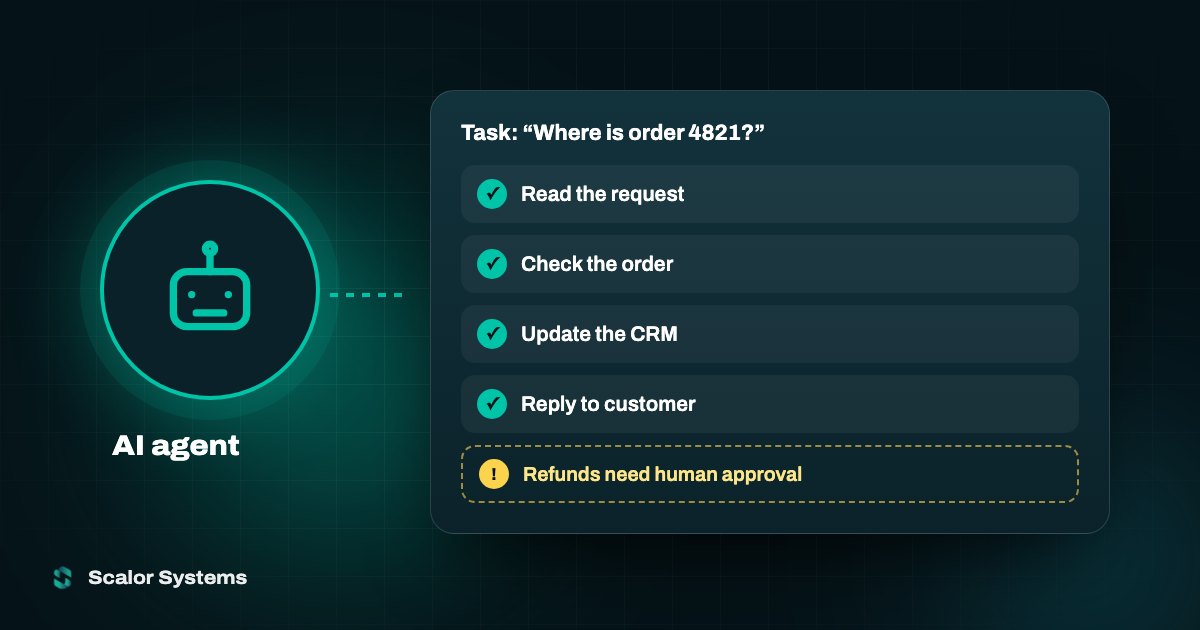
A chatbot answers questions. An AI agent takes actions: it reads a request, decides what steps are needed, uses your systems to carry them out, and reports back. For example, it might look up an order, update a record, draft a reply or book a meeting. The value comes from finishing tasks, not just talking about them.
Use cases that work today
- Customer service agents that check order status, process simple changes and escalate the rest, in Arabic and English.
- Accounts payable agents that read invoices, match them to purchase orders and flag mismatches for review.
- Sales agents that qualify inbound leads, answer product questions and book meetings into your calendar.
- Internal help desk agents that answer HR and IT questions from your policies and raise tickets when needed.
- Reporting agents that pull data from several systems and draft a weekly summary for managers.
Why agent projects fail
Most failures come from giving the agent too much freedom too early. Agents asked to “handle operations” get confused. Agents given one clear job, a short list of allowed actions and a way to ask for help perform reliably.
Patterns that make agents succeed
- One clear job per agent, with a measurable outcome.
- A limited set of actions, and read-only access wherever possible.
- Human approval for anything costly or irreversible.
- Full logs of what the agent did and why, for review and auditing.
- Regular testing against real cases as your business changes.
Where to start
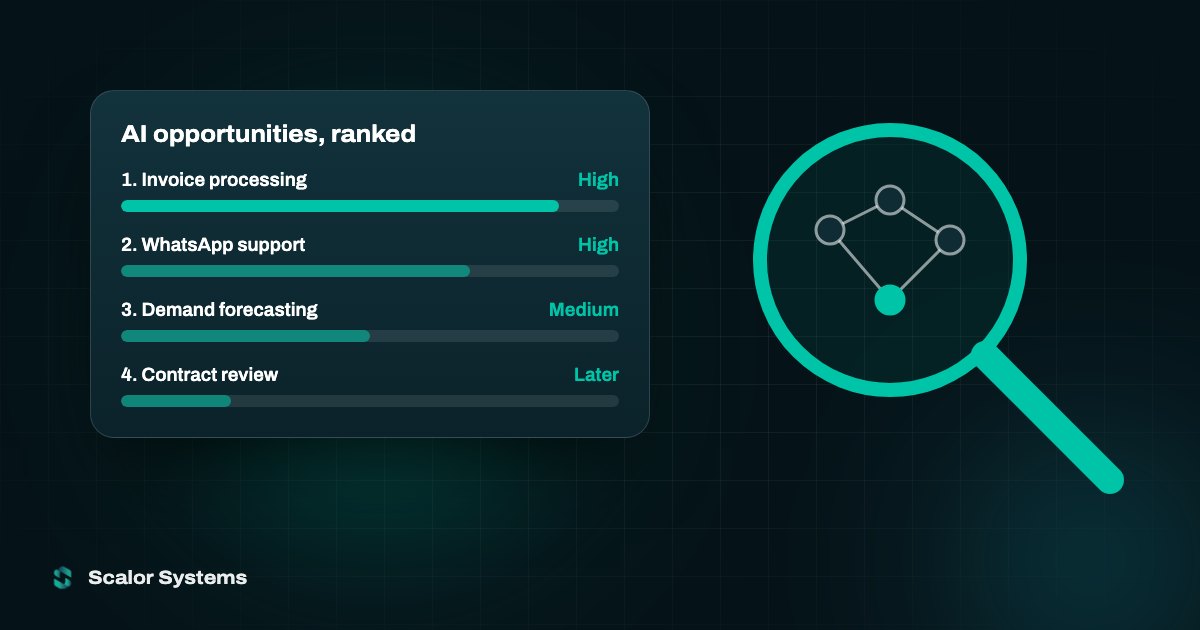
Choose a task that is frequent, rule-based and currently done by hand, where a mistake is easy to catch. Build an agent for that one task, prove the savings, then add the next. Small, reliable agents beat one ambitious agent that nobody trusts.