Saudi Market8 min read
GCC Natural Language Processing Market 2026: Size, Growth and Use Cases
Key takeaways
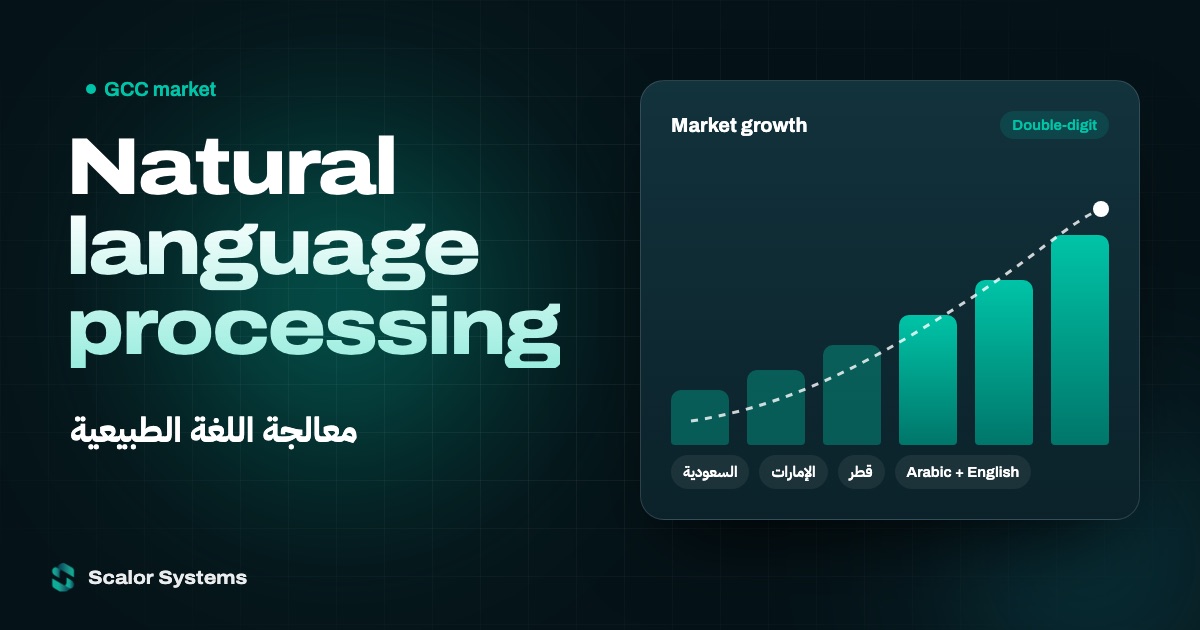
- Every published forecast shows the GCC natural language processing (NLP) market growing at double-digit rates, but size estimates differ widely because each report counts different things.
- Growth is driven by Vision 2030, Saudi Arabia’s Year of AI, sovereign Arabic language models such as ALLaM, Jais, Falcon Arabic and Fanar, and customers who expect answers in Arabic on WhatsApp.
- For most businesses the value is in applying Arabic NLP to one high-volume workflow, such as support messages or incoming documents, not in building a model.
Natural language processing (NLP) is the part of AI that reads, understands and writes human language. In the GCC it has moved from research labs to everyday business use, powered by Arabic language models built in the region. This guide sums up what published research says about the size of the market, why the numbers vary, what is driving growth, and where NLP creates value for companies today.
How big is the GCC NLP market?
There is no single agreed figure. Research firms publish forecasts for Saudi Arabia, the UAE and the wider Middle East, and they define the market differently. Here are the publicly available headline figures.
| Market | Source | Size | Growth |
|---|---|---|---|
| Saudi Arabia NLP | MarketsandMarkets | US$281.1M (2026) to US$850.3M (2031) | 24.8% a year |
| Saudi Arabia NLP | IMARC Group | US$5.7B (2025) to US$30.8B (2034) | 20.67% a year (2026–2034) |
| Middle East NLP | Ken Research | US$4.9B (base year 2024) | Forecast to 2030 |
| UAE generative AI | MarketsandMarkets | US$383.4M (2025) to US$5.41B (2030) | 46.0% a year |
Why the forecasts differ so much
The two Saudi estimates above are about twenty times apart. That isn’t a mistake. It comes from what each report counts. Some include hardware, speech analytics, optical character recognition (OCR) and interactive voice response (IVR) systems, and services. Others count only NLP software. The base year, the currency conversion and the set of industries covered also change the result.
If you use these numbers in a business case, quote the source and its scope, and compare growth rates rather than absolute sizes. The consistent message across every report is strong double-digit annual growth.
What is driving growth
- National AI programmes: Saudi Vision 2030, SDAIA’s national data and AI strategy and 2026 as Saudi Arabia’s Year of AI; the UAE National AI Strategy 2031.
- Sovereign Arabic language models: ALLaM from Saudi Arabia, Jais and Falcon Arabic from the UAE, and Fanar from Qatar.
- Customer expectations: people want instant answers in Arabic, often in dialect, on WhatsApp and web chat.
- Data rules and local hosting: the Saudi Personal Data Protection Law (PDPL) and in-country cloud regions make it practical to run Arabic AI close to the data.
- Economic stakes: PwC estimated that AI could add US$320 billion to the Middle East economy by 2030, including about US$135 billion in Saudi Arabia, equal to 12.4% of GDP.
The Arabic language models behind the market
A few years ago, Arabic was a weak spot for AI. That has changed quickly. In August 2025 HUMAIN, owned by the Public Investment Fund, launched HUMAIN Chat, powered by its ALLaM 34B Arabic model. In the UAE, Jais is an open Arabic-centred model family, and the Technology Innovation Institute released Falcon Arabic in May 2025 with support for Modern Standard Arabic and key dialects. In Qatar, QCRI at Hamad Bin Khalifa University builds the Fanar models.
For businesses, this means strong Arabic understanding is now available both from global AI providers and from regional models, including options that can be hosted in the Kingdom.
Country snapshot
- Saudi Arabia: the largest economy and, according to PwC, the largest expected gain from AI in the region. SDAIA sets the national direction, PDPL governs personal data, and ALLaM is the national Arabic model.
- United Arab Emirates: PwC expects the highest share of GDP from AI in the region, close to 14% by 2030. It is home to Jais and Falcon and has a strong generative AI market.
- Qatar: builds its own national Arabic model, Fanar, through QCRI.
- Bahrain, Kuwait, Oman and Qatar: PwC expects AI to add about 8.2% of GDP by 2030 across these markets combined.
Where NLP pays off for GCC businesses
- Customer service: WhatsApp and website chatbots that answer in Saudi dialect and English and hand over to staff.
- Banking and insurance: reading Arabic forms, IDs and claims, and routing complaints by topic and urgency.
- Retail and e-commerce: order-status questions, product search in Arabic, and analysis of Arabic reviews.
- Healthcare: appointment booking and summarising Arabic patient messages, with clinical review.
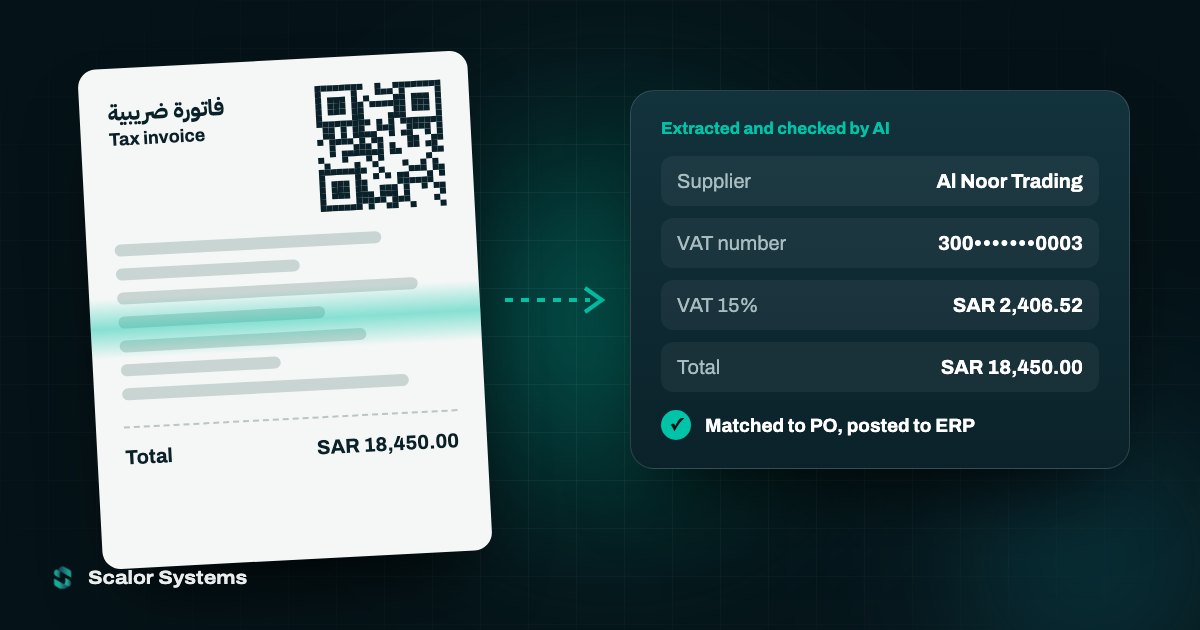
- Finance and operations: extracting data from Arabic invoices and contracts into the ERP.
- Internal knowledge: private assistants that answer staff questions in Arabic from company documents, with sources.
What the market numbers mean for your company
Market forecasts measure spending across the whole region. They don’t tell you whether a project will pay off for you. The companies seeing returns start with one high-volume Arabic workflow, test AI on a sample of their own real messages or documents, and measure time saved before they scale.
Most of that value comes from applying existing models well: connecting them to your data and systems, testing them on Saudi dialect, and adding human review where mistakes are costly. Building your own model is rarely needed.
Sources
- MarketsandMarkets: Saudi Arabia Natural Language Processing Market
- IMARC Group: Saudi Arabia Natural Language Processing Market
- Ken Research: Middle East Natural Language Processing Market
- MarketsandMarkets: UAE Generative AI Market
- PwC Middle East: The potential impact of AI in the Middle East
- Saudi Press Agency: HUMAIN launches HUMAIN Chat, powered by ALLaM 34B
- Technology Innovation Institute: Falcon Arabic
- QCRI: Fanar Arabic-centric large language model