Saudi Market5 min read
ZATCA Wave 25: What Small Saudi Businesses Must Do
Key takeaways
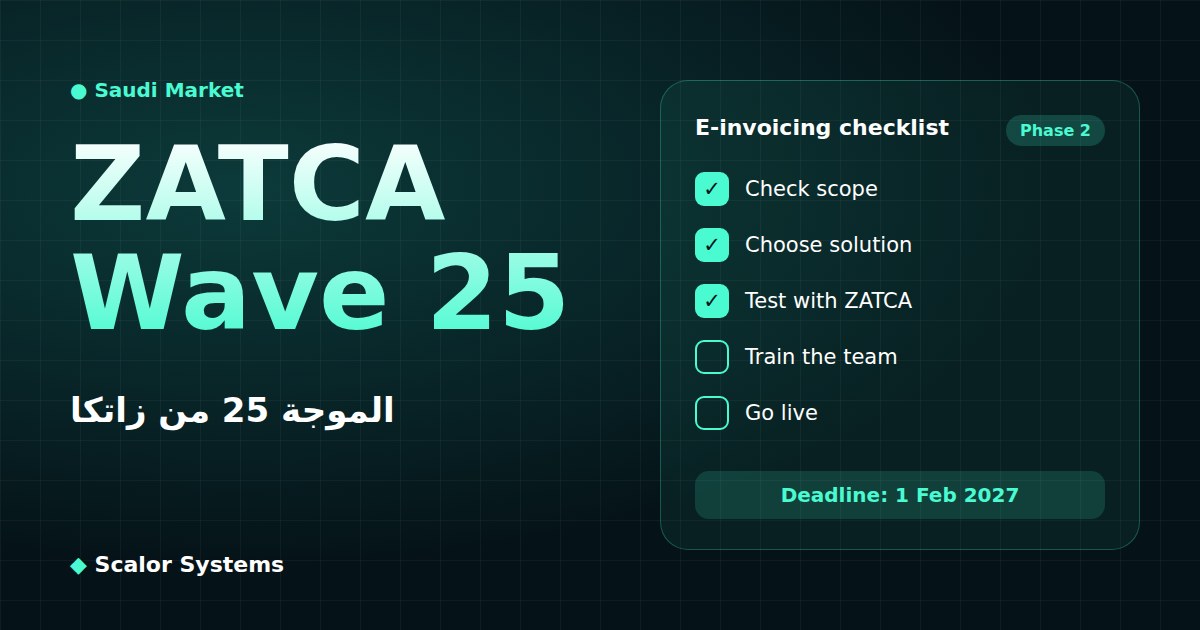
- ZATCA announced Wave 25 on 24 July 2026: VAT-registered taxpayers with VAT-subject revenue above SAR 187,500 in 2022, 2023, 2024 or 2025 must integrate with Fatoora by 1 February 2027.
- Wave 25 is the lowest revenue threshold so far, so many small businesses that never needed Phase 2 are now in scope.
- Start now: confirm whether you were notified, pick an e-invoicing solution, test it with ZATCA, and train the team before the deadline.
ZATCA Wave 25 is the newest group of Saudi taxpayers required to connect their invoicing systems to ZATCA’s Fatoora platform. It reaches smaller businesses than any earlier wave, so owners who have never thought about Phase 2 e-invoicing may now have a deadline: 1 February 2027. This guide explains who is affected, what changes, and a checklist to finish in time.
What ZATCA Wave 25 requires
On 24 July 2026, the Zakat, Tax and Customs Authority (ZATCA) published the criteria for Wave 25 of the e-invoicing Integration Phase (Phase 2). It targets taxpayers whose revenues subject to VAT exceeded SAR 187,500 during 2022, 2023, 2024 or 2025. Targeted taxpayers must integrate their e-invoicing solutions with the Fatoora platform by no later than 1 February 2027.
Note the wording: exceeding the threshold in any one of the four years is enough. A business that had a strong year in 2022 and is smaller today can still be selected.
How the waves have moved down the revenue ladder
| Wave | VAT-subject revenue threshold | Deadline or compliance window |
|---|---|---|
| Wave 23 | Above SAR 750,000 (2022, 2023 or 2024) | 1 January to 31 March 2026 |
| Wave 24 | Above SAR 375,000 (2022, 2023 or 2024) | 30 June 2026 |
| Wave 25 | Above SAR 187,500 (2022, 2023, 2024 or 2025) | By 1 February 2027 |
Each wave has roughly halved the threshold, which is why Phase 2 now reaches small trading, services and contracting firms, clinics and shops.
Phase 1 versus Phase 2 e-invoicing
Phase 1, the generation phase, has applied since 4 December 2021 and requires taxpayers to generate and store tax invoices and notes through compliant electronic solutions. Phase 2, the integration phase, adds technical and business requirements and connects your electronic solution to ZATCA’s systems. It has been rolled out in waves since 1 January 2023. Under Phase 2 you issue invoices in the required format, with additional data fields, and integrate with Fatoora.
ZATCA states it will notify taxpayers of their wave at least six months in advance. Wave 25 followed that pattern, with a deadline about six months after the announcement.
E-invoicing checklist before 1 February 2027
- Check whether you are in scope: compare your VAT-subject revenue for 2022 to 2025 with SAR 187,500, and look for ZATCA’s notification in your Fatoora account and registered contacts.
- List every place invoices are created today: accounting software, ERP, point of sale, spreadsheets and Word templates.
- Choose a Phase 2 compliant solution, or ask your current software vendor for their ZATCA integration plan and dates.
- Clean your master data: correct legal names, VAT numbers, addresses and product codes so invoices pass validation first time.
- Run the onboarding and test invoices with ZATCA before go-live, not in the last week.
- Train the people who issue invoices, credit notes and debit notes, and agree who fixes rejected invoices.
- Plan a backup routine and an owner for the process, so that one absence does not stop invoicing.
A realistic timeline from now
Counting back from 1 February 2027 leaves a little over four months. A sensible plan is to spend October confirming scope and choosing a solution, November on setup and data clean-up, December on testing with real invoices, and January on training and a controlled go-live. That leaves a few weeks of buffer for vendor delays, which are common when a whole wave of businesses asks for the same thing at once.
Agree the owner early. E-invoicing touches finance, sales and IT, and projects stall when nobody is accountable for the final date. A single named person, with authority to decide on the vendor and the test plan, is worth more than a long steering committee.
Where automation and AI can help
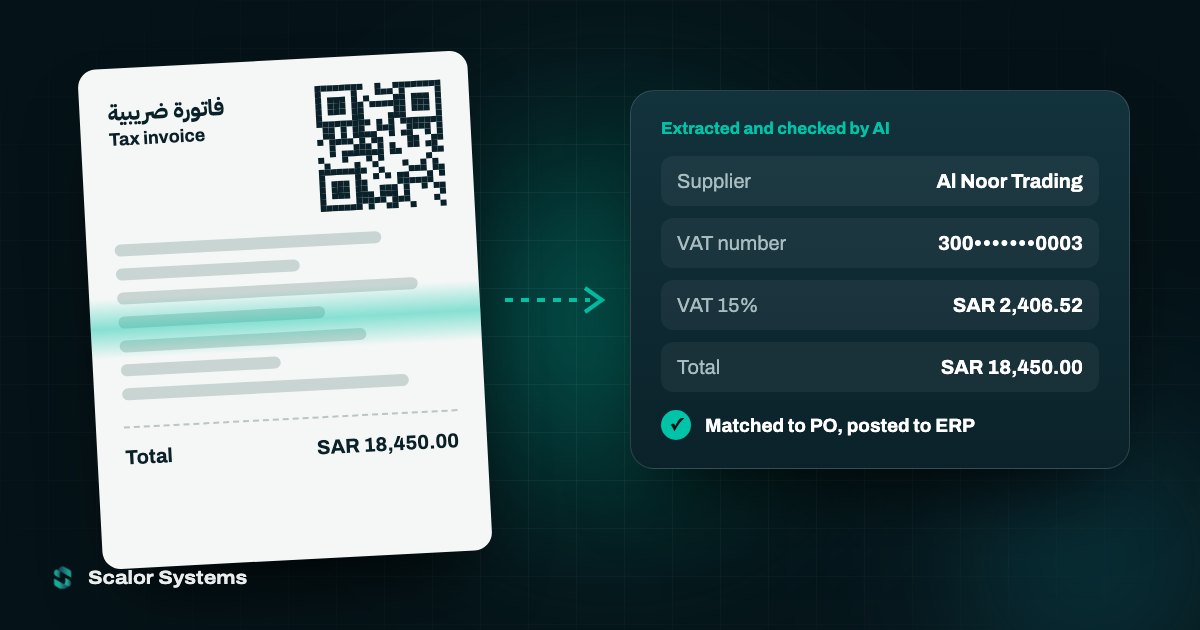
E-invoicing compliance concerns the invoices you issue, and it needs a compliant solution. AI does not replace that. It can help around it, especially with the paperwork on the receiving side: reading supplier invoices in Arabic and English, matching them to purchase orders, and flagging duplicates or missing fields for a person to review.
Businesses now entering Phase 2 also receive more structured invoices from suppliers. Reading those automatically into your accounts payable process saves re-typing and reduces errors. For more detail, see our guide on AI invoice processing and ZATCA e-invoicing.
Common mistakes to avoid
- Waiting for a reminder: the deadline in ZATCA’s announcement is the date that counts.
- Assuming your software vendor has handled it without asking for confirmation in writing.
- Testing with clean sample data only, then failing on real invoices with discounts, credit notes or Arabic names.
- Leaving staff training until after go-live.
Next step
If you are in Wave 25, treat the next four months as a small project with an owner, a plan and a test date. If you would like help connecting your ERP or accounting system and automating the documents around it, contact Scalor Systems at scalorsystems.com.
Sources
- ZATCA: Criteria for selecting the targeted taxpayers in Wave 25 of the Integration Phase (24 July 2026)
- ZATCA: E-invoicing roll-out phases
- The Invoicing Hub: Extended grace period, start of wave 24, and future wave 25 in Saudi Arabia (28 July 2026)
- EY: Saudi Arabia announces 23rd wave of Phase 2 e-invoicing integration (7 July 2025)